The Relationship Between Schedule 40 Wall Thickness and Pressure
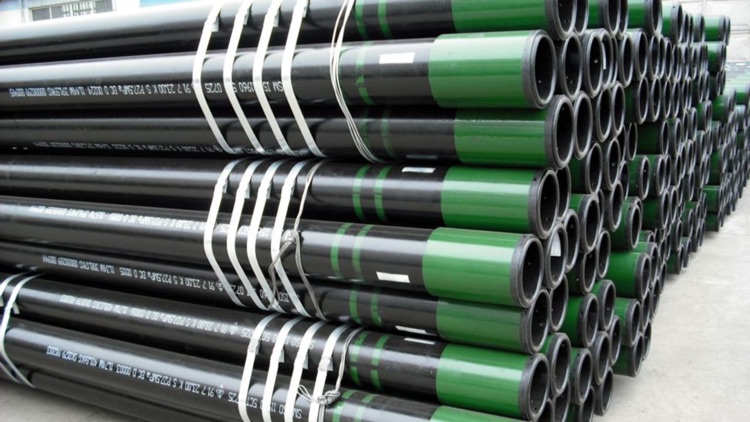
The Schedule 40 pipe is very common in construction and water supply, fire protection, and industrial systems. The relation between pressure and wall thickness is one of the most crucial aspects of using this pipe. Simply put, the thickness of the wall assists the pipe in safely accommodating the internal pressure. When the thickness is not appropriate, the pipe can collapse under pressure. This is the reason why, before an engineer selects sch 40 wall thickness of a project, the effect on the pressure capacity is carefully examined.
Schedule 40 Wall Thickness Meaning
The thickness of the wall of the pipe, according to a standard classification system, is referred to as schedule 40 wall thickness. It is not the set number of all pipes. Instead, it is dependent on the nominal pipe size (NPS). This variation guarantees that the pipes with various sizes have a balanced strength, cost-effectiveness, and usability in engineering systems. That is, Schedule 40 is to give a medium strength solution uniformly to a variety of pipe sizes, not necessarily a specific thickness value.
How Pressure Acts Inside a Pipe
When a fluid or gas is flowing in a pipe, it produces internal pressure, exerting homogeneous pressure in every direction. This force is the most important to develop and is known as hoop stress, and it attempts to widen the pipe on the outside.
Three primary risks are possible in case of insufficient wall thickness:
- Pipe expansion (diameter deformation)
- Wall cracking under stress
- Sudden rupture in extreme cases
The pipe wall must resist this stress continuously during operation. Therefore, wall thickness becomes the primary structural barrier against internal pressure failure.
The Direct Relationship Between Wall Thickness and Pressure Capacity
The relationship between wall thickness and pressure is straightforward in engineering:
Greater wall thickness = higher pressure resistance
Schedule 40 pipes are considered medium wall thickness pipes, meaning:
- Suitable for moderate pressure systems
- Strong enough for most industrial utility applications
- Not designed for extremely high-pressure systems
For example:
- Schedule 40 is commonly used in water supply and fire sprinkler systems
- High-pressure systems typically require Schedule 80 or Schedule 160 pipes
The reason is simple: thicker walls provide more material to absorb and resist internal force.
Why Pipe Size Changes the Thickness-Pressure Balance
The thickness of the wall is not constant across sizes in Schedule 40 pipes. The bigger the pipes, the thicker the wall must be, since they are subjected to more total force, since they have a larger surface area. Even though pressure per unit area is the same, the overall stress on larger pipes is greater. Thus, the bigger the pipe diameter, the more engineers add to the thickness of the wall to ensure the safety of pressure levels. This equilibrium will make sure that pipes are dependable in varying sizes.
Corrosion and Its Impact on Effective Thickness
In real-world applications, pipe performance is not only affected by design thickness but also by corrosion over time.
Corrosion gradually reduces the effective wall thickness, which leads to:
- Lower pressure resistance
- Increased risk of leakage
- Reduced service life
To prevent this, engineers often use:
- Corrosion allowance in design calculations
- Protective coatings
- Material selection based on fluid type
This ensures that even after years of operation, the pipe still maintains safe working pressure levels.
Engineering Standards That Define Pressure Limits
International standards like ASME B36.10M and ASME B31.3 inform the relationship between Schedule 40 wall thickness and pressure. These standards determine the pipe dimensions as well as assist the engineers in calculating the allowable pressure through formulae that are based on the stress, diameter, and thickness. These estimations make pipes work in a safe way within the design specification. The absence of these standards would result in unreliable and unsafe pressure selection.
Schedule 40 vs Higher Schedules in Pressure Applications
Schedule 40 pipes are widely used because they offer a balance between cost and performance.
Common applications include:
- Water distribution systems
- Fire protection pipelines
- HVAC systems
- General industrial piping
However, when operating pressure increases, engineers often shift to:
- Schedule 80 for high-pressure systems
- Schedule 160 for extreme pressure conditions
The selection depends on:
- Pressure level
- Temperature conditions
- Safety requirements
- Fluid type (water, steam, chemicals, etc.)
Conclusion
The relationship between Schedule 40 wall thickness and pressure is based on simple engineering principles. A thicker wall gives more resistance to the internal pressure, whereas a thin wall is fit to low-pressure systems. Thickness, however, is not a determinant of pressure capacity. There are also material strength, temperature, corrosion, and standards. A combination of these factors will help engineers to choose the appropriate Schedule 40 pipe to use in every application, guaranteeing performance, safety, and service life.