How to Choose a Sheet Metal Fabrication Partner Without Getting Burned
Sourcing custom sheet metal parts can look simple from the outside. Send drawings, collect quotes, choose the lowest price, wait for parts.
That is also how many projects end up late, inconsistent, or stuck with a supplier who stops replying once the first problem appears.
Good sheet metal fabricators are not impossible to find. The harder part is knowing what to check before you trust one with production work. Price, lead time, MOQ, and ISO certification matter, but they do not tell you enough by themselves.
This guide is for engineers, procurement managers, and product teams that already know what sheet metal fabrication is. The goal is to help you separate a real long-term partner from a shop you will be replacing after one order.
The usual criteria are not enough
Most buyers start with the same four questions:
- What is the price per part?
- What is the lead time?
- What is the minimum order quantity?
- Do you have ISO certification?
Those questions are necessary, but they only cover the basics. A decent supplier can quote a competitive price and show an ISO 9001 certificate.
What the quote may not show is whether the supplier can hold tolerance on an 8-bend enclosure, whether the welding team has experience with your alloy, or whether an engineer will catch a DFM issue before the first batch turns into scrap.
The better buyers ask about the process behind the quote.
What to look for in a sheet metal fabrication partner
1. Process capability under one roof
The hidden cost in sheet metal sourcing is often coordination. A supplier cuts your parts, sends them out for finishing, brings them back for assembly, then ships them to you. Every handoff adds schedule risk and creates another place for quality problems to disappear.
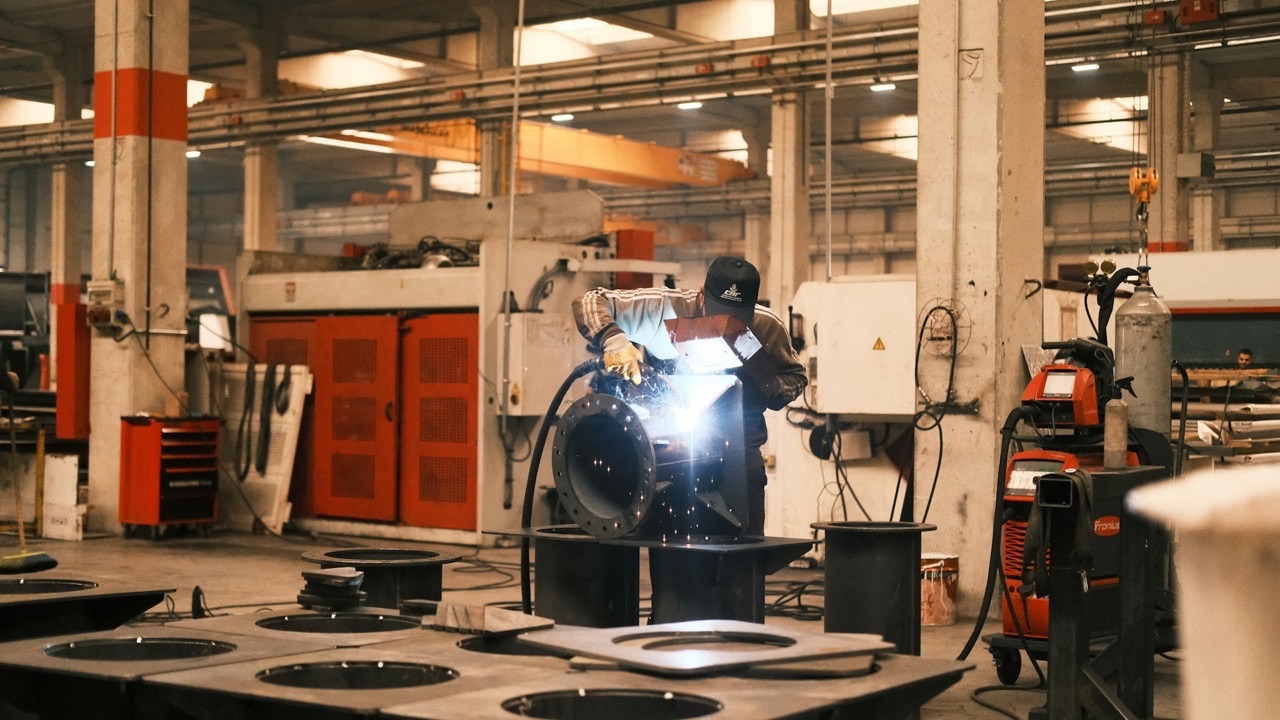
A stronger fabrication partner can handle more of the workflow in-house: laser cutting, punching, bending, welding, hardware insertion, powder coating, anodizing, plating, and final assembly.
You do not need every supplier to own every process. But you do need to know which steps are controlled internally and which ones are subcontracted.
Ask this before shortlisting:
Which steps in my process will you perform in-house, and which steps will you subcontract?
Get the answer in writing.
2. Engineering support, not just machine capacity
A fabricator that only runs machines is easy to replace. A fabricator that reviews your design and flags problems before production is much more useful.
This matters most on complex parts and first runs. A sheet metal engineer can spot the bend radius that is too tight, the bend sequence that traps the tool, the hole too close to a bend, or the weld joint that will distort thin material.
That review is worth more than a clean inspection report after the parts are already made.
Ask:
Do you include DFM review during quoting? If your engineer finds a problem, how do you communicate it?
A good supplier will explain the issue, show the risk, and suggest a practical change. A weak supplier will either quote silently or push the problem back to you after production starts.
3. Material experience that matches your parts
Not every sheet metal shop works equally well with every material.
A supplier optimized for mild steel may struggle with 316L stainless. A shop that mainly bends aluminum may not have the tooling or process knowledge for copper, brass, or titanium. Surface finishing changes the equation again.
Match the supplier’s daily work to your actual parts. If your product is an anodized aluminum enclosure, you want a supplier that runs aluminum frequently and understands anodizing requirements. You do not want a carbon steel shop that sends aluminum finishing to the cheapest local subcontractor.
A competent full-service fabricator should be comfortable with carbon steel, 304 and 316 stainless, 5052 and 6061 aluminum, copper, and brass. For regulated or unusual materials, ask for recent examples.
4. Honest tolerance discussion
Every fabricator advertises tight tolerances. The useful question is where those tolerances apply.
Sheet metal has natural variability. Laser-cut holes may hold about +/-0.1 mm. Bent flanges accumulate error across multiple bends. A realistic overall tolerance on a complex formed part may be closer to +/-0.3 to +/-0.5 mm. Welded assemblies can vary more.
If a supplier claims they can hold +/-0.05 mm on a 10-bend enclosure without asking follow-up questions, be careful. They may not understand the drawing, or they may be saying yes before checking the process.
A better supplier will tell you which features can be held tightly, which ones need relaxed tolerances, and where a small design change would make the part easier to manufacture.
5. Quality documentation you can actually use
ISO certification means a quality system exists. It does not guarantee your parts will pass inspection.
For production parts, ask what documentation comes with the order:
- Material certificates for each batch
- First article inspection reports
- Dimensional inspection records
- Surface finishing process records
- Traceability to raw material for regulated industries
If the supplier hesitates when you ask for first article inspection reports, treat it as a warning sign. The documents do not need to be fancy. They need to exist, be accurate, and match your parts.
Industry requirements that change the supplier choice
Aerospace and defense
Traceability is not optional. Every material batch needs a mill certificate, and every process step needs a record. The supplier should understand AS9100 expectations even if the whole supply chain is not AS9100 certified.
Tolerance and inspection requirements are stricter. The cost of a nonconforming part entering an assembly is too high to rely on casual checks.
Medical devices
Medical fabrication often needs cleaner handling, better documentation, and more control over surface finish. Stainless steel passivation, coating biocompatibility, and contamination control can matter as much as dimensional accuracy.
Choose a supplier with medical fabrication experience, not just a general precision shop.
Electronics enclosures
Electronics enclosures often require EMI shielding, thermal management, and accurate connector openings. General fabricators sometimes underestimate these details.
If the enclosure needs to pass EMC testing, the supplier should understand seam design, grounding features, and how fabrication choices affect shielding.
Automotive
Automotive work is not only about making a good sample. The supplier has to hold consistency over volume. Ask about statistical process control, production drift, and PPAP documentation if the part will enter an automotive supply chain.
Questions buyers forget to ask
These questions are more useful than a generic supplier questionnaire.
“What is your scrap rate on first runs of complex parts?” A supplier who tracks it and gives a number is being transparent. “Very low” without a number usually means they do not know or do not want to say.
“Walk me through what happens when a part fails inspection.” Do they rework it quietly? Stop the batch and notify you? Quarantine the parts and run a root-cause review? The process matters.
“What is your capacity situation right now?” A supplier running near full capacity may still quote your job, but your rush order may lose priority to a larger customer. Ask before you become dependent on them.
“Can I visit the facility?” A legitimate fabricator should be comfortable with a visit or at least a video tour. If the facility looks nothing like what was described, that tells you enough.
Red flags that look fine on paper
Pricing far below the market. Competitive pricing is good. A quote that is 40% lower than everyone else needs an explanation: thinner material, different finishing, offshore subcontracting, or missing inspection steps.
Perfect lead times on every part. Real shops have machine schedules. A supplier quoting the same short lead time for simple flat parts and welded assemblies is probably not estimating the job properly.
No engineering questions. If a supplier quotes a complex drawing without asking anything, either the design is unusually clean or they are planning to figure it out later.
Vague finishing descriptions. “Powder coating available” is not a finishing spec. Ask about coating thickness, color matching, adhesion testing, and salt spray requirements if those matter to the end use.
Building a supplier relationship that lasts
The best sheet metal suppliers are not just vendors. They understand what the part does, why certain features matter, and where the design can be made easier to produce.
That only happens if you share enough context. Tell the supplier what the part is used for. Bring them into design review early. Give specific feedback when quality issues appear. Pay on time.
In return, expect clear communication about capacity, real DFM support, and early warnings when something in the design is likely to cause trouble.
Companies like ShincoFab are built for this type of relationship because they handle the chain from laser cutting through finishing and assembly. Fewer handoffs usually means fewer surprises and clearer accountability.
Practical shortlist checklist
Before committing to a new sheet metal fabrication supplier, verify:
- Cutting, forming, finishing, and assembly capability is clear
- DFM review is included during quoting
- Material certifications are available
- First article inspection reports are standard
- Tolerance capability is explained by process step
- The supplier has experience with your material and industry
- A site visit or video tour is allowed
- References match your part complexity
- Capacity has been discussed honestly
- Quality escalation process is defined
Most suppliers cannot check every box. The ones that can are often worth paying a little more for. Supplier failure, rework, and missed delivery dates usually cost more than the small savings from the cheapest quote.
FAQ
How many sheet metal fabrication suppliers should I qualify? For production-critical parts, qualify at least two suppliers: one primary and one backup. Single-source dependency is easy to ignore until the supplier misses a shipment or runs out of capacity.
Is overseas sheet metal fabrication worth the risk? It depends on the supplier. Geography matters, but process capability, communication, and documentation matter more. An overseas supplier with strong engineering support and in-house finishing can outperform a local shop that lacks those capabilities.
What is a realistic lead time for custom sheet metal parts? Simple flat laser-cut parts may take 3 to 5 business days. Multi-bend formed parts often take 5 to 10 days. Welded assemblies may take 10 to 15 days. Powder coating or anodizing can add 3 to 7 days, and assembly may add another 2 to 5 days. Treat uniformly short lead times across all part types with caution.
When should I use a full-service fabricator instead of a specialist shop? Use a specialist when you have high volume in one process and need process optimization. Use a full-service fabricator when your part needs several operations, when coordination risk matters, or when the design is still changing.