5 Things Buyers Get Wrong About ERW Steel Pipe
ERW pipe has a reputation problem that it mostly doesn’t deserve. Among buyers who haven’t worked with it closely, there are a handful of assumptions that keep circulating — assumptions that lead to over-specifying seamless pipe in applications where ERW would work just as well, or to passing over ERW suppliers without really understanding what they’re offering.
Here’s where the misconceptions come from and what the reality actually looks like.
Misconception 1: ERW Pipe Is Lower Quality Than Seamless
This is the most common one, and it’s the least accurate.
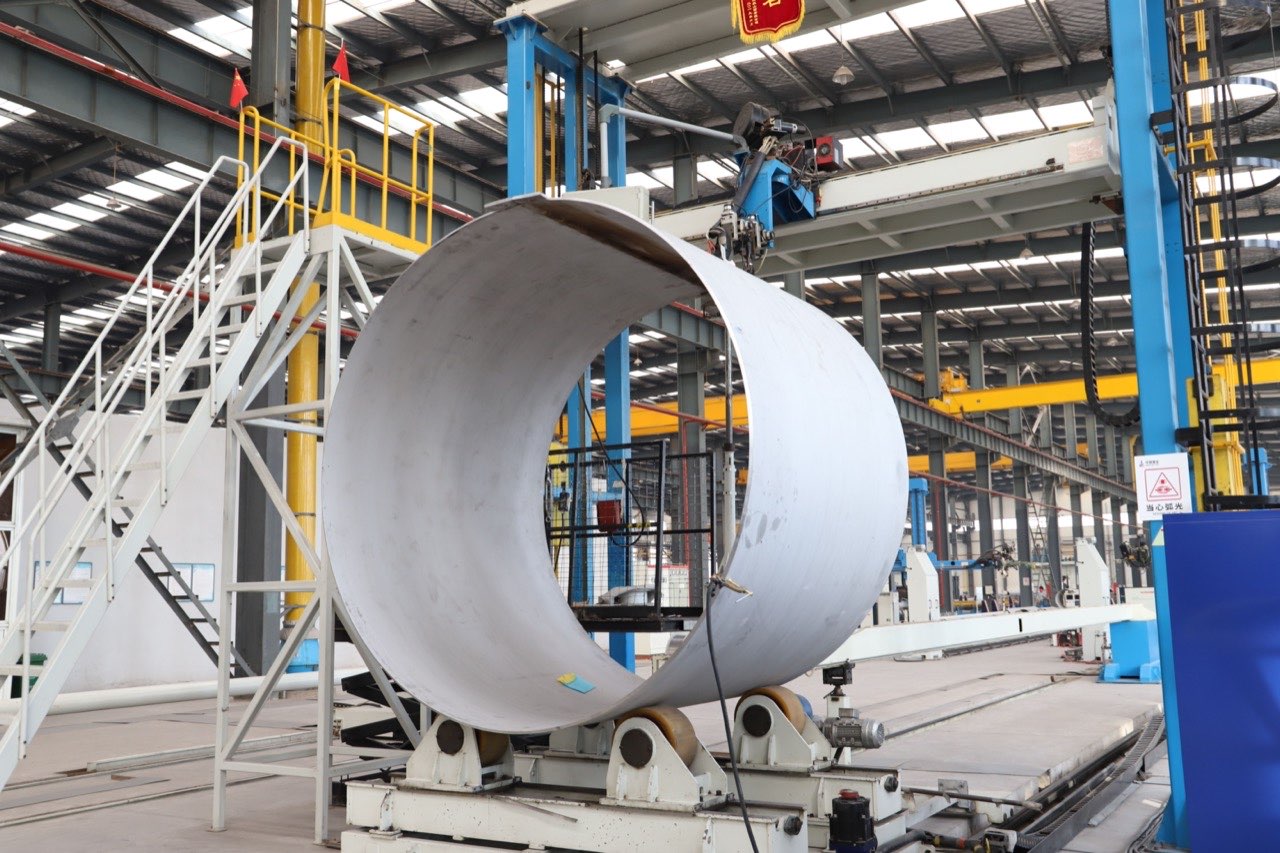
ERW stands for electric resistance welded. The pipe is formed from flat steel strip or plate, rolled into a tube, and welded along the longitudinal seam using electrical resistance heat — no filler material, just the heat generated by the resistance of the steel itself as current passes through it. The result is a weld zone that, in modern production, is fully fused and typically post-weld heat treated to normalize the seam.
The assumption that this is inherently inferior to seamless pipe comes from older manufacturing practices, when ERW welds were less consistent and more prone to defects. Modern ERW production is a different situation. Mills producing to ASTM A53 or API 5L use automated ultrasonic or electromagnetic inspection of the weld seam as a standard part of the process. The weld quality is controlled, tested, and documented.
ERW pipe produced to current standards is not lower quality than seamless. It’s a different manufacturing method with different characteristics, and for most applications those characteristics are perfectly adequate.
Misconception 2: ERW Can’t Be Used for Pressure Applications
This follows from the first misconception and is equally wrong in most cases.
ASTM A53 Type E (the ERW version) carries the same pressure rating calculation methodology as A53 Type S (seamless). The design formula uses wall thickness, outside diameter, and material yield strength — the manufacturing method isn’t a variable in the calculation for most service conditions.
API 5L, the standard for pipeline service, explicitly covers ERW pipe and is widely used for oil and gas gathering and transmission lines operating at significant pressures. The pipeline industry has been using ERW pipe in pressure service for decades with a strong track record.
Where seamless does have a genuine advantage is in very high temperature, very high pressure, or highly cyclic service — conditions where the longitudinal weld seam introduces a potential stress concentration point that seamless avoids. For those specific applications, the specification usually calls for seamless explicitly. For general process piping, utility service, and most structural applications, ERW is an approved and appropriate choice.
Misconception 3: The Weld Seam Is a Weak Point
Related to the pressure misconception, some buyers worry that the longitudinal seam represents a structural weak point that seamless pipe doesn’t have.
In practice, the weld zone in properly produced ERW pipe is not weaker than the parent material. The post-weld heat treatment that reputable mills apply normalizes the microstructure of the weld zone, bringing its properties in line with the surrounding steel. Hydrostatic testing, required under both A53 and API 5L, confirms pressure integrity of each length.
The weld seam does need to be considered in some installation contexts — for example, placement orientation in bending applications, or inspection requirements in certain code-governed systems. But “considered” doesn’t mean “avoided.” It means understood.
Misconception 4: ERW Is Only Worth Using to Save Money
Some buyers treat ERW as the budget option — what you specify when you’re trying to cut costs, with the implication that you’d use seamless if budget weren’t a concern.
This framing gets it backwards. ERW isn’t the compromise choice. For applications within its appropriate service range, it’s simply the correct specification. Specifying seamless pipe for a general utility water line or a structural support isn’t a quality upgrade — it’s over-engineering that adds cost without adding performance.
Good procurement practice involves matching the specification to the requirement. ERW Steel Pipe covers a wide range of applications well, and choosing it for those applications isn’t cutting corners. It’s specifying correctly.
Misconception 5: ERW Is Hard to Source With Proper Documentation
Some buyers who’ve had bad experiences with undocumented or poorly certified pipe have developed a general skepticism about ERW that’s really skepticism about low-quality suppliers.
ERW pipe from reputable mills comes with the same documentation as seamless: mill test reports with heat chemistry and mechanical test results, dimensional inspection records, and hydrostatic test certifications. The standards that govern ERW pipe — A53, API 5L, and others — require the same level of traceability as seamless pipe standards.
The documentation issue isn’t an ERW issue. It’s a supplier quality issue. A well-run ERW producer has the same paper trail as a well-run seamless producer. If you’re not getting proper MTRs, the problem is the supplier, not the pipe type.
Most of the skepticism around ERW pipe traces back to either outdated information about manufacturing quality or experiences with low-quality suppliers that got generalized to the product category. Modern ERW pipe produced to current standards is a reliable, well-documented product with a broad range of appropriate applications. Understanding where it genuinely differs from seamless — and where it doesn’t — leads to better specification decisions and, usually, lower project costs without any compromise on performance.