How I Stopped Thinking About My Phone Battery During the Workday
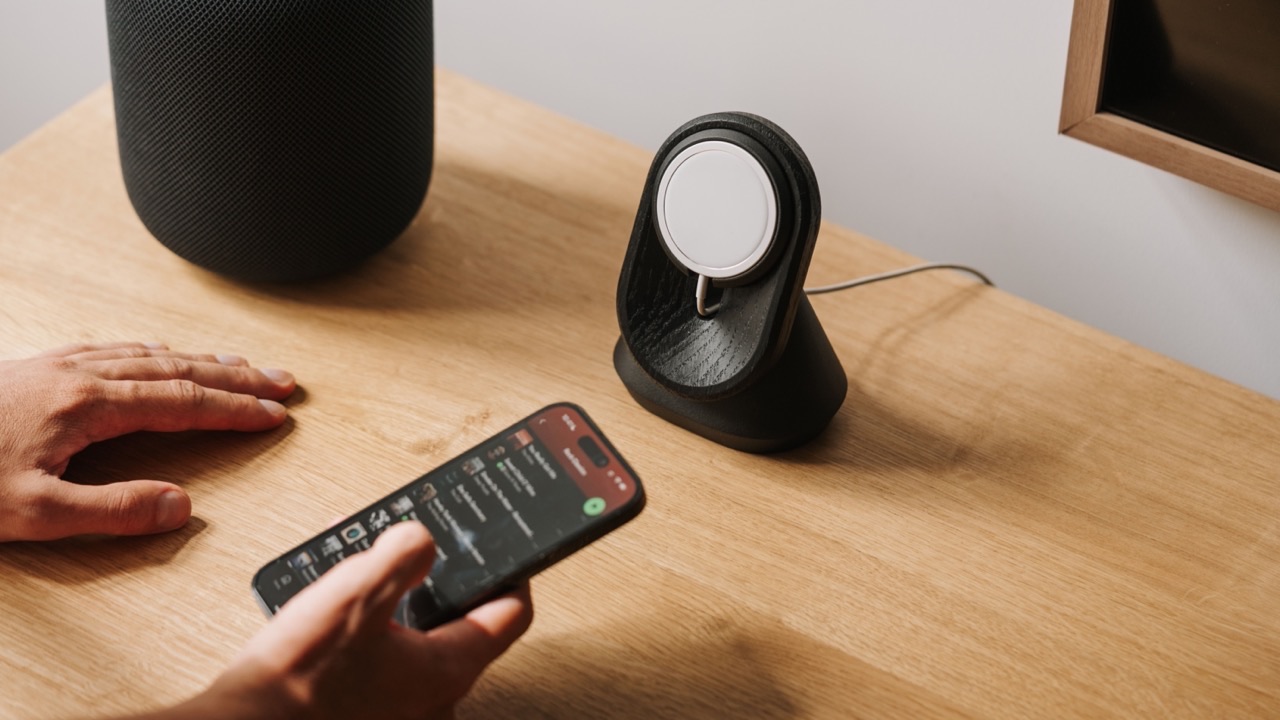
There’s a version of the workday where your phone battery is never something you think about. The phone is always charged enough when you need it, you never have to interrupt what you’re doing to plug it in, and you never reach for it in a moment that matters and find it at 8%. For most of my working life, this wasn’t how it went. Now it mostly is, and the change was simpler than I expected.
The difference is having a phone stand with wireless charging at the desk. Not a charging pad you have to remember to put the phone on, not a cable you have to plug in, but a stand the phone lives on when it’s not in my hand — and charges automatically every time it’s there.
The battery anxiety problem
Phones with heavy use days — lots of calls, navigation, hotspot use, video — can chew through battery fast enough that a full charge in the morning isn’t always enough to make it to evening without intervention. The intervention usually looks like hunting for a cable, finding the cable, plugging in, then being tethered to a specific location for however long it takes to get back to a reasonable charge level.
This is annoying enough that most people develop workarounds: a spare cable at the desk, a power bank in the bag, the habit of plugging in whenever sitting down regardless of current charge level. These workarounds work, but they require deliberate action and create a background overhead of cable management and charge monitoring.
The alternative is to charge opportunistically rather than reactively — to let the phone top up during the periods when it’s sitting idle anyway, so that it never gets low enough to require intervention. This is what a desk stand makes possible, but only if the charging friction is low enough that you actually put the phone back on the stand after each use.
Why friction is the whole problem
A wireless charging pad on the desk sounds like it should solve the opportunistic charging problem. Set the phone on it, it charges. In practice, a flat pad requires accurate placement — the phone needs to be centered well enough on the charging coil that the connection is made. It’s not hard, but it’s also not automatic. Over the course of a day, the small friction of “aim and place” means the phone ends up next to the pad more often than on it.
A MagSafe stand removes this friction completely. The magnetic ring in the phone finds the charging coil and snaps into alignment regardless of how exactly you set it down. The connection is made before you’ve let go of the phone. This is a small difference in the individual action, but it changes the aggregate behavior across a whole workday: the phone is on the stand and charging far more consistently than it is with a pad, because there’s nothing to get right.
The result is that the phone’s battery level at the end of a workday reflects the actual energy consumption of the calls and messages and tasks, not consumption plus whatever was lost during the hours it was sitting idle next to a charger it wasn’t quite connected to.
What the stand actually changes about the day
The change I noticed first was that I stopped checking the battery percentage. This is a habit I’d developed as a response to unreliable charging — a background monitoring behavior to make sure I wasn’t heading into an important call with the phone at 20%. When the phone is reliably charging whenever it’s in the stand, the monitoring becomes unnecessary. The phone is almost always at a higher level than I need it to be.
The second change was the cable situation. I still have a cable at the desk for other devices, but the phone cable I’d always needed for emergency top-ups is gone. This is a smaller desk and a less cluttered desk.
The third change is that I use the phone more confidently on the days that are heavier on calls and screen time. If I know the phone is going to spend significant time on the stand between uses, I know it’s going to have the charge I need for the heavier parts of the day. A magsafe phone stand that charges the phone every time it’s sitting idle turns out to change the planning assumptions around battery in ways I didn’t anticipate.
The longer-term battery health question
One concern people sometimes have about wireless charging is whether frequent top-up charging damages the battery faster than charging in bigger cycles from low to full. The short version is that partial-charge cycles are actually easier on lithium batteries than full discharge-to-charge cycles. Keeping the battery in the middle range through opportunistic charging is better for long-term battery health than running it down and doing a full charge.
The practical implication is that opportunistic charging through a stand isn’t just convenient — it’s also better for the battery’s longevity than the alternative pattern most people end up with when they’re managing charging manually.
Whether it’s the kind of thing worth paying attention to
A phone stand reads as a minor accessory. The effect it has on the specific problem of phone battery management over the course of a workday is larger than the object suggests, for the reason that battery anxiety is a background cognitive load that’s easy to habituate to and hard to notice until it’s gone.
When the phone is always at a usable charge level, that background monitoring stops happening. The attention that was going into it goes somewhere else. Whether that’s worth anything depends on how much of your workday involves the phone and how often you’ve dealt with the battery running low at inconvenient moments. For anyone who’s plugged in at the last minute before an important call, the answer is probably yes.